Home
>
PDF Tips
>
【Latest Update】15 Best NotebookLM Infographic Prompts & Styles (2026)
Home
>
PDF Tips
>
【Latest Update】15 Best NotebookLM Infographic Prompts & Styles (2026)
【Latest Update】15 Best NotebookLM Infographic Prompts & Styles (2026)
The way we transform complex information into visual stories has fundamentally changed. As of March 3, 2026, Google rolled out a significant update to its Infographic feature within NotebookLM, enhancing customization options and output quality.
Whether you are a researcher drowning in data, a student trying to simplify study notes, or a marketer needing quick visual content, mastering the best NotebookLM infographic prompts is now an essential skill. This guide explores the latest capabilities, provides a curated list of powerful prompts, and shows you how to edit your creations like a pro using PDNob.

Google has renamed NotebookLM to Gemini Notebook. Throughout this article, “NotebookLM” refers to the current Gemini Notebook experience, as the product and its core features remain the same.

Part 1. What’s New in 2026 NotebookLM Infographic Update & Limits
On March 3, 2026, Google released a significant update to NotebookLM, adding native infographic generation powered by its AI engine. This long-awaited feature allows users to convert notes, research data, and study material into visual infographics automatically.
However, the update also revealed some notebooklm infographic limit constraints:
Critical NotebookLM Infographic Limits You Must Know
- No Direct Editing: Generated infographics are static images. You cannot click and modify text, drag elements, or adjust layouts manually. If the AI misrepresents your data, you must regenerate entirely .
- Source Caps: Each notebook allows maximum 50 sources with 500,000 words total. File sizes cannot exceed 200MB .
- Design Constraints: Customization happens only through the "Customize" text prompt—you cannot directly select colors, fonts, or reposition elements .
- Processing Delays: Complex sources with multiple documents may timeout or require multiple generation attempts.
These limitations make notebook lm infographic not working scenarios common for users expecting Canva-like flexibility. The solution? Generate with NotebookLM, then edit with specialized OCR tools like PDNob(covered in Part 3)



Video Tutorial: How to Edit NotebookLM Infographics
Part 2. 8 Best NotebookLM Infographic Prompts for Every Need
Creating effective visuals requires more than generic commands. The best notebooklm infographic prompts act as precision tools—transforming raw sources into structured, audience-specific content. Whether you're synthesizing academic papers, preparing for exams, or building client presentations, tailored prompts eliminate guesswork and maximize NotebookLM's AI capabilities.
Below are six battle-tested scenarios with copy-pasteable templates designed for real-world workflows.
1. Research Analysis: notebooklm prompts for research
Researchers need accuracy and citation integrity. These notebooklm prompts for research ensure data fidelity while improving comprehension.

Create a landscape infographic comparing three primary methodologies from my uploaded sources. Use minimalist academic style with navy and gold accents. Include:
- Create an infographic that includes methodology definitions with inline citations for each research source.
- Add visual sections summarizing the key advantages and limitations of each study.
- Include sample size data such as participant numbers or dataset scale.
- Design the layout with at least 30% white space to improve readability.

Prompt 2:
Generate a detailed data visualization infographic showing statistical trends from my datasets. Use tech-style design with dark background and neon data points. Highlight p-values below 0.05 in red. Include a 'Methodology Note' section explaining sample sizes and confidence intervals.
2. Study & Learning: notebooklm prompts for studying
Students need quick comprehension and retention aids. These notebooklm prompts for studying convert dense material into visual study guides.

Create a study infographic based on my lecture notes.
Organize it into key concepts, definitions, and examples.
Generate a visual study guide summarizing the most important ideas from my course materials.
Include short explanations and supporting examples.
Turn my study notes into a concept-map infographic showing how the main topics relate to each other.
3. Slide Deck Visualization: notebooklm slide deck prompt
Professionals need presentation-ready materials. These notebooklm slide deck prompt templates bridge research and boardroom delivery.
Generate a Presenter Slides deck (not Detailed Deck) from my market research sources. 12 slides maximum. Include: problem statement, data visualization, solution framework, competitive analysis. Use corporate blue #003366 and white scheme. Add speaker notes for each slide.
Create a Detailed Deck infographic summary from my project documents. Landscape format, professional minimalist style. Convert lengthy sections into visual charts and process diagrams. Ensure each slide has one clear takeaway message.
4. Timeline & Historical Infographics
Some topics are best explained through chronological order. Timeline visuals help show how events or developments unfold over time.
Create a timeline infographic based on the events described in my uploaded documents.
Highlight major milestones and key turning points.
Generate a historical timeline showing the development stages described in my sources.
Turn my notes into a visual timeline explaining the progression of the topic.
5. Process & Workflow Infographics
Processes and workflows are easier to understand when visualized step-by-step. This is useful for tutorials, system explanations, and operational documentation.
Create a process infographic explaining the workflow described in my documents.
Show each step with arrows and short descriptions.
Generate a step-by-step visual guide summarizing the process explained in my notes.
Turn the procedure in my documents into a flowchart-style infographic.
6. Content Marketing & Social Media
Marketers need scroll-stopping visuals optimized for specific platforms and engagement metrics. These prompts prioritize shareability and brand consistency.
Create a square infographic (1080x1080px) summarizing my blog post on [topic]. Use bold, high-contrast colors (yellow and black). Maximum 7 words in headline. Include one shocking statistic from my sources as focal point. Instagram-optimized with hashtag footer space.
Generate a vertical infographic (1080x1920px) showing 5 tips from my how-to guide. Use kawaii style with pastel colors and emoji-inspired icons. Number each tip clearly. Include 'Save for later' call-to-action at bottom. Pinterest and Instagram Stories format.
7. Event Planning & Project Management
Event coordinators and PMs need timeline visualization and resource allocation clarity. These prompts focus on chronological organization and stakeholder communication.
Create a Gantt-style timeline infographic showing project milestones from my planning documents. Use corporate minimalist style with milestone markers. Include dates, responsible parties, and deliverables for each phase. Landscape orientation for PowerPoint integration.
Generate an event planning checklist infographic from my coordination notes. Use hand-drawn sketchnote style with checkboxes. Organize by timeline: 3 months out, 1 month out, 1 week out, day-of. Include vendor contact placeholders.
8. "Awesome" Creative Use Cases: awesome notebooklm prompts
Push boundaries with these awesome notebooklm prompts for innovative applications beyond standard business and academic use.
Create a personal knowledge dashboard infographic synthesizing my journal entries and goal documents from the past year. Use minimalist style with progress bars and habit tracker visuals. Include "Wins," "Lessons," and "Focus Areas" sections. Portrait format for annual review printing.
Generate a recipe infographic from my cooking blog sources. Use kawaii style with hand-drawn food illustrations. Include ingredient checklist, step-by-step process with timers, and nutrition highlights. Square format for Pinterest food boards.
Design a book summary infographic for [book title] from my reading notes. Use timeline style showing narrative arc with key quote callouts. Character relationship map as secondary visual. Optimized for Goodreads sharing and book club discussions.
The best notebooklm infographic prompts share common DNA: they specify audience, format, notebooklm Infographic Styles, and constraints. Match your scenario above, copy the template, customize bracketed sections, and generate.
Part 3. NotebookLM Infographic Can’t Be Edited Directly? Try PDNob
Once NotebookLM generates infographics and slide decks, they export as static PDFs. You cannot directly edit text, adjust color schemes, or replace branding elements. This is the most reported pain point—beautiful AI-generated content locked in uneditable format.
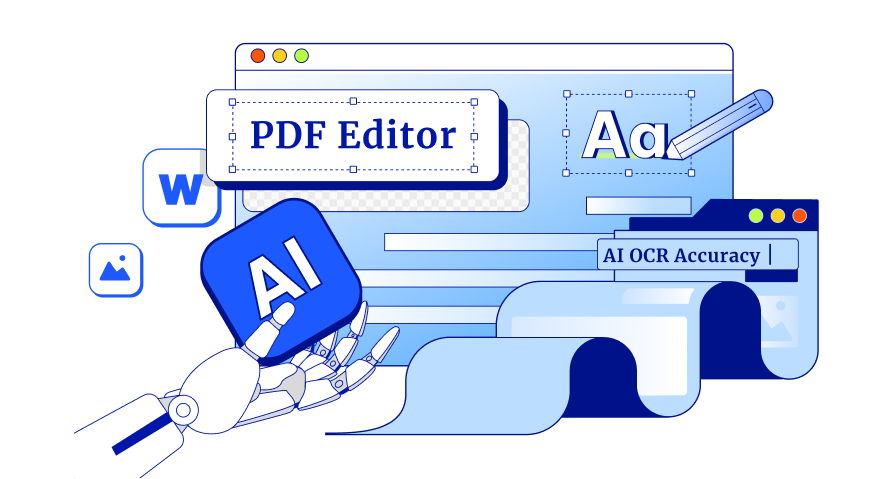
PDNob PDF Editor solves this core problem through advanced OCR (Optical Character Recognition) technology, transforming static PDF infographics into fully editable documents.
Why Choose PDNob for Your NotebookLM Infographics
- OCR-Powered Text Recognition: PDNob's advanced OCR engine scans your exported infographic and recognizes every text element as editable content. Fix typos, update statistics, or rewrite entire sections without starting from scratch.
- Preserve Visual Integrity: PDNob maintains original layouts, fonts, and design elements while making them editable. No more misaligned text boxes or broken formatting.
- Batch Editing Capabilities: Need to update branding across multiple infographics? PDNob allows batch text replacement and style adjustments, saving hours of manual work.
- Multi-Language Support: The OCR engine recognizes over 20 languages, making it ideal for international research teams and multilingual content creation.
- Export Flexibility: Save edited files as PDF, Word documents, or images—perfect for integrating into presentations, websites, or social media.
How to Edit Stunning NotebookLM Infographics in PDNob
-
Export from NotebookLM: Generate your infographic in NotebookLM, then right-click and save as PNG, or use your browser's print-to-PDF function to create a PDF version for editing.
-
Open in PDNob: Launch PDNob PDF Editor and open your exported file. The software supports both direct image editing and PDF manipulation.
Click Perform OCR at the top to start text recognition. If required, click Download to install the OCR module. Then select Scan to Editable Text OCR mode, which will extract text and separate infographic elements for editing.
-
Refine Text and Elements: Use PDNob's "Edit All" feature to modify any text overlays, adjust font sizes, or correct spacing issues. The OCR functionality can extract text from your infographic if you need to repurpose content.
-
Enhance Visual Quality: Add professional watermarks, adjust backgrounds, or merge multiple infographics into a comprehensive presentation deck. PDNob's batch processing allows you to apply consistent formatting across multiple NotebookLM exports simultaneously.
-
Export in Multiple Formats: Convert your refined infographic to Word, PowerPoint, or high-resolution images while maintaining original formatting-perfect for academic papers or business presentations.

In the interface, locate Document Language and select the language that matches your infographic. If this step is skipped, OCR accuracy can drop significantly, leading to errors or unrecognized text.


PDNob for NotebookLM Infographic Branding
For teams needing branded, editable NotebookLM infographics, PDNob solves 5 key challenges via OCR. Here’s how it maps to common editing needs:
 Please swipe to view
Part 4. Advanced NotebookLM Infographic Styles and Pro Techniques
Now that you understand the basics and have a toolkit of prompts, let's explore advanced strategies to elevate your infographics from good to exceptional.
Mastering different NotebookLM i nfographic s tyles and combining them with the best notebooklm infographic prompts will set your work apart.
Native NotebookLM Visual Styles (Limited Availability)
Google has begun introducing preset visual styles directly within NotebookLM's interface, including options like "Kawaii," "Sketch," and "Cyberpunk" .
However, this visual style feature is currently being rolled out gradually and is not available to all users yet. If you don't see style selection buttons in your interface, you're not alone—Google typically phases such features over weeks or months.
How to Check Your Access
-
Open a notebook and navigate to the Studio (infographic generation)
-
Look for visual style selection buttons or dropdown menus before generating.
-
If absent, you'll need to use text-based style prompts (covered below)


When available, simply click your preferred style (e.g., "Kawaii" for playful content, "Cyberpunk" for tech topics, "Sketch" for educational materials) before generating. This applies consistent visual treatment without complex prompt engineering.
Master Five Distinct NotebookLM Infographic Styles (Official & Beyond)
1. Text-Based Style Commands for All Users
Whether you have native style access or not, these notebooklm Infographic Styles prompts force specific aesthetic outputs through descriptive language:
Use minimalist academic style with high information density. Navy and gold color scheme. Include inline citations as footnotes. Prioritize white space (30% minimum) for readability. Landscape orientation for poster presentation compatibility.
Apply corporate minimalist style with dark mode background (#1a1a1a) and neon accent highlights (#00d4ff). Clean sans-serif typography. Include data source annotations. Professional iconography suitable for C-suite presentations.
Use hand-drawn sketchnote style with organic textures. Black ink fine-liners with teal (#008080) and orange (#ff6b35) marker accents. White paper background texture. Include stick figures or simple illustrations for concept explanation. Portrait format for mobile study apps.
Use tech-style design with dark mode background and neon data points. Grid overlays and futuristic typography. Holographic color effects (#00ffff, #ff00ff). Suitable for AI, blockchain, or software documentation topics.
2. Hybrid Style Creation Techniques
Combine multiple style descriptors for unique outputs that stand out:
Create a quarterly report infographic using kawaii style with professional data visualization. Pastel corporate colors (#e6f3ff, #fff0e6). Cute mascot character explaining charts. Serious metrics presented in approachable, shareable format. Square format for LinkedIn and Instagram.
Design a research findings infographic using cyberpunk aesthetics with academic rigor. Dark background with neon citation highlights. Data tables with glowing borders. Methodology section in terminal-font style. Landscape format for tech conference presentations.
Pro Tips: Use PDNob for Hybrid Workflows
Generate your base infographic with NotebookLM, export as PDF, then use PDNob's OCR capabilities to:
- Extract key statistics for standalone charts
- Translate infographics for international audiences
- Combine multiple AI-generated infographics into comprehensive reports
- Add interactive elements like hyperlinks before distribution
- Fix any AI-generated errors or misaligned data points
Part 5. FAQs of Best NotebookLM Infographic Prompts
Q1. What are the best notebooklm infographic prompts for beginners?
A1: If you're new to NotebookLM’s infographic feature, start with simple, structured prompts like:
- “Create a study infographic from my lecture notes, organized into key concepts and examples.”
- “Generate a timeline infographic based on my uploaded history notes.”
These prompts specify input (e.g., “lecture notes”) and output format (e.g., “study infographic”), ensuring quick, usable results while avoiding notebook lm infographic not working issues.
Q2. How do I fix issues when my notebook lm infographic is not working?
A2: Common problems include text errors, layout overlaps, or uneditable static images.Solutions:
- Simplify your prompt (reduce data volume or split complex topics).
- Check thenotebooklm infographic limit(e.g., 15 visual elements per graphic).
Q3. How can I create a branded infographic for presentations using
NotebookLM?
A3: To add branding (e.g., logos, corporate colors):
- Specify brand elements in your prompt (e.g., “Use corporate blue (#003366) and white, add our logo at the top.”)
- If NotebookLM restricts direct editing, use PDNob to import the PDF and manually adjust branding before exporting.
Conclusion
The 2026 update has cemented NotebookLM's place as a leader in AI-powered visualization. By mastering the best notebooklm infographic prompts, you can effortlessly convert research, study notes, and complex data into compelling visual stories.
From troubleshooting when your notebook lm infographic not working to using tools like PDNob for professional-grade edits, the power to create stunning visuals is now entirely in your hands. Start experimenting with these prompts today, and watch your ideas come to life.


- Make scanned PDFs searchable and editable with 99% OCR precision
- Batch convert PDFs to Word, Excel, PPT, images, PDF/A, Text, EPUB, etc., up to 30% faster
- Edit PDFs easily like Word, including text, images, watermarks, links, and backgrounds
- Annotate PDF with highlights, comments, shapes, stickers, and stamps
- Run smoothly on any PC without lags or crashes, even on low-spec machines
 Secure Download
Secure Download
Speak Your Mind
then write your review
Speak Your Mind
Leave a Comment
Create your review for PDNob articles
Related articles

AI Tools Writer / Workflow Analyst
Rachel has spent the last 5 years testing and writing about AI-powered tools across writing, design, and research workflows. She focuses on practical AI tool usage, helping knowledge workers turn generative AI into everyday productivity.