

PDNob Online is currently available only on Windows and Mac desktop computers. Please switch to a desktop browser to use our features.
Founded in 2007, Tenorshare PDNob is trusted by millions to simplify work.
9,214,730 receipts have been converted to structured data for free.
Get PDNob Desktop, Your All-in-One PDF Solution!
Follow These 3 Steps to Extract Data from Any Receipt:
Upload a photo, scan, or PDF of your receipt to PDNob.
Select the receipt language and click "Extract Data" to start recognition.
Download your result as a structured, editable file with the recognized receipt data.
Thermal receipt paper fades fast and often prints with washed-out contrast, so totals and item lines that looked fine at checkout can be nearly unreadable a few weeks later in a wallet or drawer.
Receipts pulled from a pocket or bag are usually creased, folded, or torn at the edges, and those distortions can split characters apart in ways that confuse OCR engines built for flat, pristine pages.
Receipts from different retailers and countries combine currency symbols, tax codes, and decimal separators, so a generic OCR engine trained on plain text can easily misread a subtotal or a price.
Typing out every item, price, and tax line from a stack of paper receipts into a spreadsheet is repetitive and easy to get wrong, especially for anyone handling monthly reimbursements or bookkeeping.
PDNob's OCR engine is tuned to read faded thermal print, tightly packed line items, and mixed currency formats, so it holds up whether your receipt is a phone photo, a flatbed scan, or a forwarded PDF. Wrinkled edges and washed-out ink no longer stand between you and clean, usable expense data.
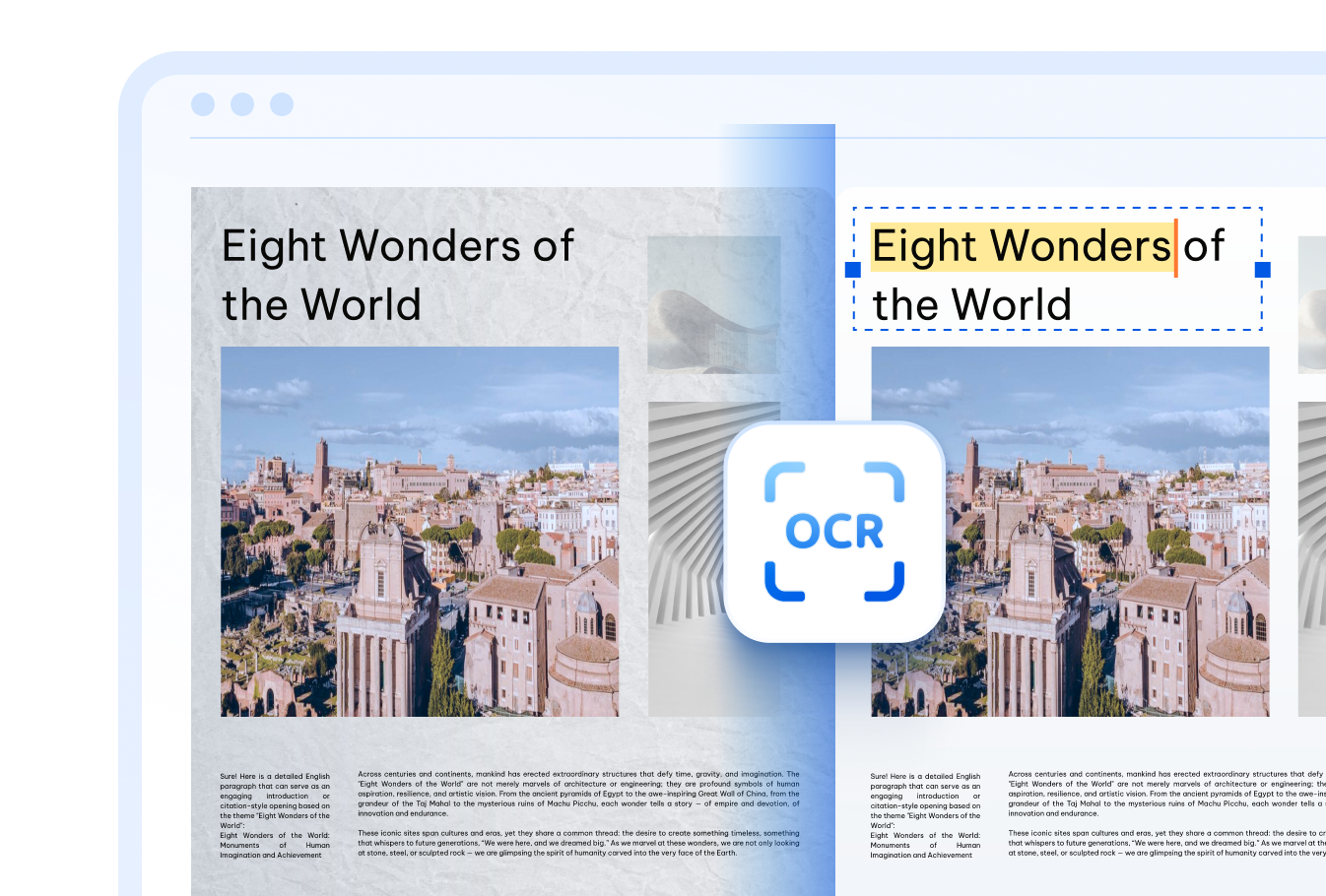
Instead of dumping a wall of plain text, PDNob organizes recognized amounts, dates, and merchant names into a layout you can scan at a glance — useful for expense reports, tax filing, or reconciling a monthly budget.
Receipts folded up in a wallet or left in direct sunlight often lose contrast fast. PDNob's recognition model is tuned to pull legible figures out of worn, faded, or creased paper, so you rarely need a second try.
Every receipt you upload travels over an encrypted connection and is cleared from our servers shortly after processing finishes, keeping personal spending details away from prying eyes.
PDNob's receipt OCR converts printed and thermal receipts into structured fields — store details, line items, totals and payment info all captured in one pass.
Identifies the merchant at the top of the receipt, including location and contact information.
Captures the date, time, and reference numbers that identify each purchase.
Breaks the receipt down into individual items, with quantity and price for each one.
Isolates every charge between the line items and the total — taxes, tips, and discounts each get their own field.
Reads the bottom of the receipt — final amount, payment method, and change returned — as separate fields.
Adds context that makes receipts easier to search and organize across a large collection.
Convert scanned documents, PDFs, and images into editable text with AI-powered OCR accuracy.
Go beyond receipt scanning — PDNob PDF Editor lets you edit extracted data, organize expense records, compress files, and manage documents entirely offline. Built for anyone who needs speed and accuracy in everyday paperwork.

Upload your receipt photo, scan, or PDF to PDNob, then click the extract button. The AI-OCR engine reads the printed text and returns recognized amounts, dates, and item lines within seconds — no account or software install needed.
PDNob doesn't support copying recognized text straight from the preview screen. Instead, download the processed file, which contains the extracted receipt data in an editable format you can open and copy from locally.
Yes. PDNob's recognition engine is tuned to handle low-contrast thermal prints, though very sun-bleached or heavily creased receipts may need a well-lit, flat photo to get the best results.
PDNob accepts common image formats such as JPG, PNG, TIFF, and BMP, along with scanned PDF files. A straight-on phone photo works about as well as a flatbed scan.
The cloud-based tool accepts files up to 15MB per upload. If you need to process a larger batch of receipts, the PDNob desktop application removes that limit entirely.
On clear, well-lit photos, PDNob's receipt OCR reaches high accuracy for totals, dates, and merchant names. Results depend on paper condition and lighting — flatter, sharper images consistently produce cleaner data.
 PDNob Online
750,796,000 Users

PDF Leaders
Since 2007
10M+ Docs
Protected Daily
ISO
Certified Tools
Your Files
Never StoredEdit, merge, sign, and convert PDFs effortlessly.