

PDNob Online is currently available only on Windows and Mac desktop computers. Please switch to a desktop browser to use our features.
Founded in 2007, Tenorshare PDNob is trusted by millions to simplify work.
3,892,514 policies and claims have been processed with insurance OCR.
Get PDNob Desktop, Your All-in-One PDF Solution!
Follow These 3 Steps to Read Insurance Data from Any Scan:
Upload a PDF or photo of a policy, insurance card, claim form, or member ID to our insurance OCR tool.
Pick the recognition language and click "OCR PDF" to start insurance OCR processing.
Download the recognized insurance data extraction output as a searchable PDF or copy values directly into your spreadsheet.
A single FNOL packet can mix a typed ACORD form, a scanned policy schedule, and three phone snapshots of an ID and insurance card, and most recognition engines refuse the bundle or split it into mismatched runs.
Each carrier prints policies, ID cards, and benefit summaries differently, and a field that lives in the top-right of one statement moves to a footnote on another after every quarterly system release.
Loss reports arrive with field-adjuster shorthand, nurse-practitioner initials, and notary seals pressed onto the page, so reviewers end up manually re-reading the page just to confirm a dollar amount.
Statutory claim windows for first-party auto, life contestability, and FEMA property filings punish any intake step that takes longer than a coffee break, and customers feel the delay long before the back-office status update.
PDNob's insurance OCR software runs on the ABBYY recognition engine, the same model trusted across banking and government for dense document work. Whether the source is a flatbed policy scan, a forwarded claim PDF, or a phone snapshot of an insurance card, ocr for insurance documents pulls policy numbers, member IDs, coverage limits, dates, and totals as editable fields, ready to drop into Excel or your case management system.
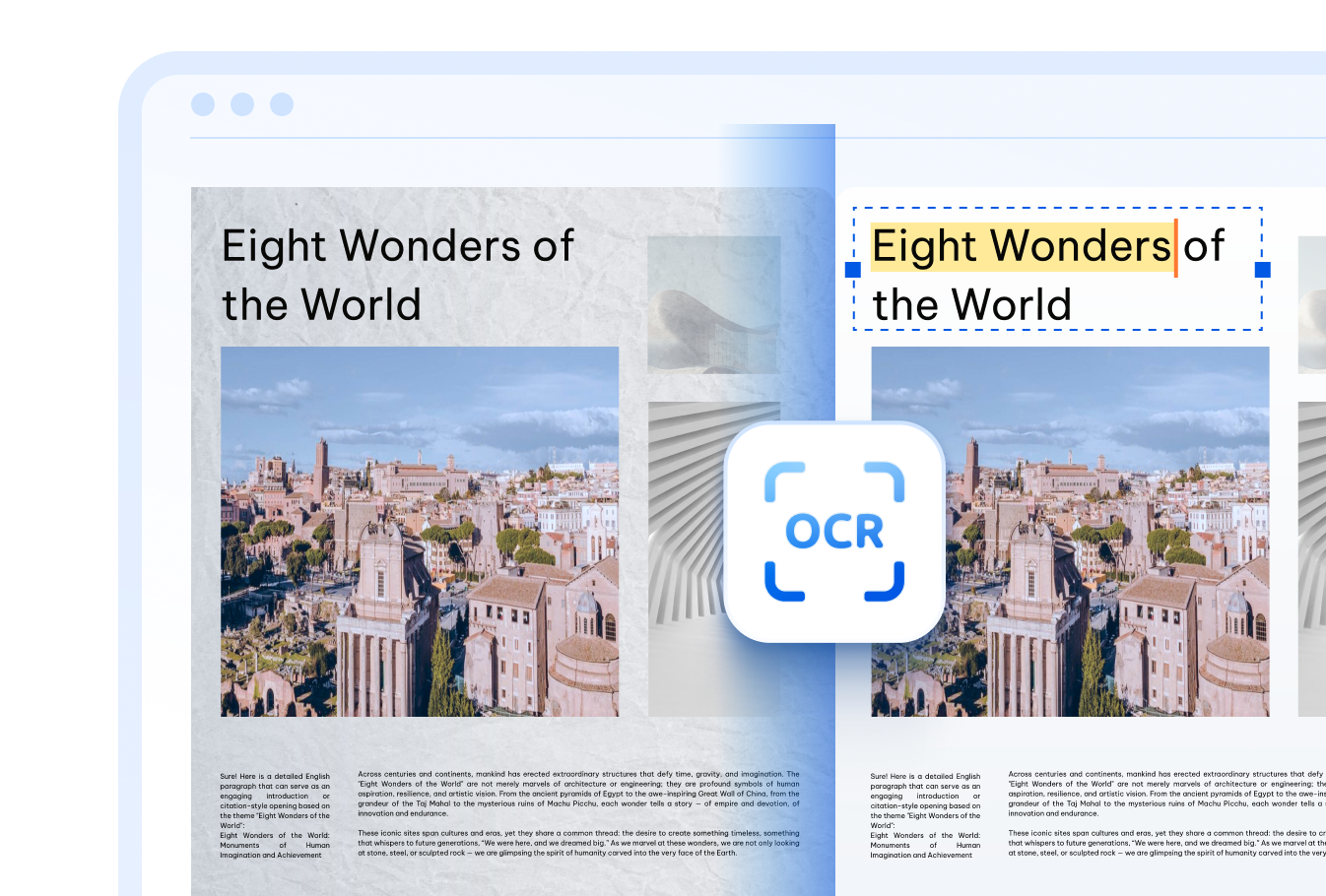

After insurance OCR wraps, PDNob hands back a searchable PDF that keeps the original policy or claim layout intact, so every field stays highlighted or copyable after recognition, which is useful for audits, coverage checks, and month-end reconciliation.
A snap taken under harsh office lighting or a card creased down the middle can still throw off generic OCR. PDNob's engine handles small fonts, skewed angles, and faint thermal prints so insurance data extraction keeps working where off-the-shelf scanners stall.
Every policy or claim file you upload travels over an encrypted channel and is removed from our servers shortly after insurance OCR wraps, so documents are never stored long-term and never shared with third parties.
PDNob's insurance OCR recognizes structured fields across the whole document clearly with intact layout.
Captures the personal details that drive every downstream insurance workflow.
Plan identifiers, term dates, and deductible data that drive quoting and renewal.
Each claim row comes through as a structured record with items, quantities, and amounts when the source claim carries them.
Front and back card details split cleanly into discrete fields, which is useful for eligibility checks on intake.
VIN, plate, and garage data that drive auto and property claim files.
Billing and payout figures that downstream rating and settlement engines key on.
Convert scanned documents, PDFs, and images into editable text with AI-powered OCR accuracy.
Go beyond basic text extraction. PDNob PDF Editor lets you edit extracted content directly, annotate, sign, redact, and manage PDFs entirely offline. Insurance ops, compliance, and back-office teams get the precision and speed they need on every document task.

Upload a policy, claim form, insurance card photo, member ID, or loss report to the insurance OCR tool and click "OCR PDF". The ABBYY-powered engine reads JPG, JPEG, PNG, TIFF, and BMP images as well as scanned PDFs, and hands back an editable, searchable PDF plus copyable text.
Yes. Upload front and back photos of an insurance card together or separately, and the engine returns member ID, group number, plan name, and effective dates alongside the policy number. Verification against carriers then takes seconds.
The ABBYY recognition engine is template-agnostic, so the same pipeline reads major US health and P&C carrier layouts without per-form setup. Output keeps header fields separate from line items, ready for audit, and exposes per-field confidence so reviewers can spot a borderline read instantly.
Yes. After the recognition job finishes, recognized values can be exported as a structured CSV or pasted directly into an Excel template. That is the format most insurance software for data ingestion expects on intake, so it cuts double-keying and keeps downstream rating engines fed.
The recognition engine supports a long list of languages, including CJK, Cyrillic, and Latin diacritic sets, so policyholder names and reference codes from international carriers come through cleanly. For documents printed in two scripts side by side, output fields are split per script for downstream validation.
Yes. Files travel over an SSL-encrypted channel into a transient storage layer and are wiped shortly after recognition. No permanent copy stays on our side, which keeps privacy reviews simple and lets brokers, carriers, and TPAs process claim files without rebuilding their data-handling workflow.
Edit, merge, sign, and convert PDFs effortlessly.
 PDNob Online
750,796,000 Users

PDF Leaders
Since 2007
10M+ Docs
Protected Daily
ISO
Certified Tools
Your Files
Never Stored