

PDNob Online is currently available only on Windows and Mac desktop computers. Please switch to a desktop browser to use our features.
Founded in 2007, Tenorshare PDNob is trusted by millions to simplify work.
1,470,923 forms have been processed with the OCR forms tool.
Get PDNob Desktop, Your All-in-One PDF Solution!
Three quick steps. No template setup, no per-vendor rules.
Upload a scanned PDF or photo of any form: a consent form, a customer complaint form, a school permission slip, a clinic intake sheet, a paper registration. Phone snaps work as well as flatbed scans.
Pick the recognition language and click "OCR PDF" to start the OCR forms job.
Download the recognized form as a searchable PDF, or copy the fields straight into a spreadsheet, contact list, or even an email reply.
Schools, doctors, clubs, and small offices still send home the same form every year. Printed, signed, snapped, forwarded as a JPEG. By the time you need the data, the form is sitting in a folder or a thread you can't find — and that's just the sort of friction OCR for forms is meant to clear.
A school permission slip, an intake questionnaire, a customer complaint form. They almost never match layouts. In one, a teacher's notes might sit in the top-left, while in another, they could be at the bottom-right, so any copy-paste workflow falls apart as soon as the template budges.
Forms mix printed labels with pencil ticks, ink signatures, and a parent's hurried handwriting on the back. A phone snap with someone's signature across an important field looks great at a glance and is genuinely hard to retype. The form is a mix of printed labels, pencil ticks, ink signatures, and a parent's hurried handwriting on the back.
As soon as a form becomes a phone JPEG, none of your contact list, donor log, or class roster can read it. So you end up retyping names, dates, and amounts by hand which is why OCR for data entry really comes down to clean field-level capture.
The machine is powered by ABBYY recognition but optimized for what you’re scanning in real life: consent forms, complaint forms, signup sheets, intake questionnaires, registration PDFs, and more. Field labels, answer blanks, checkbox rows, and signature lines are all read as separate values—no template setup or training data needed.
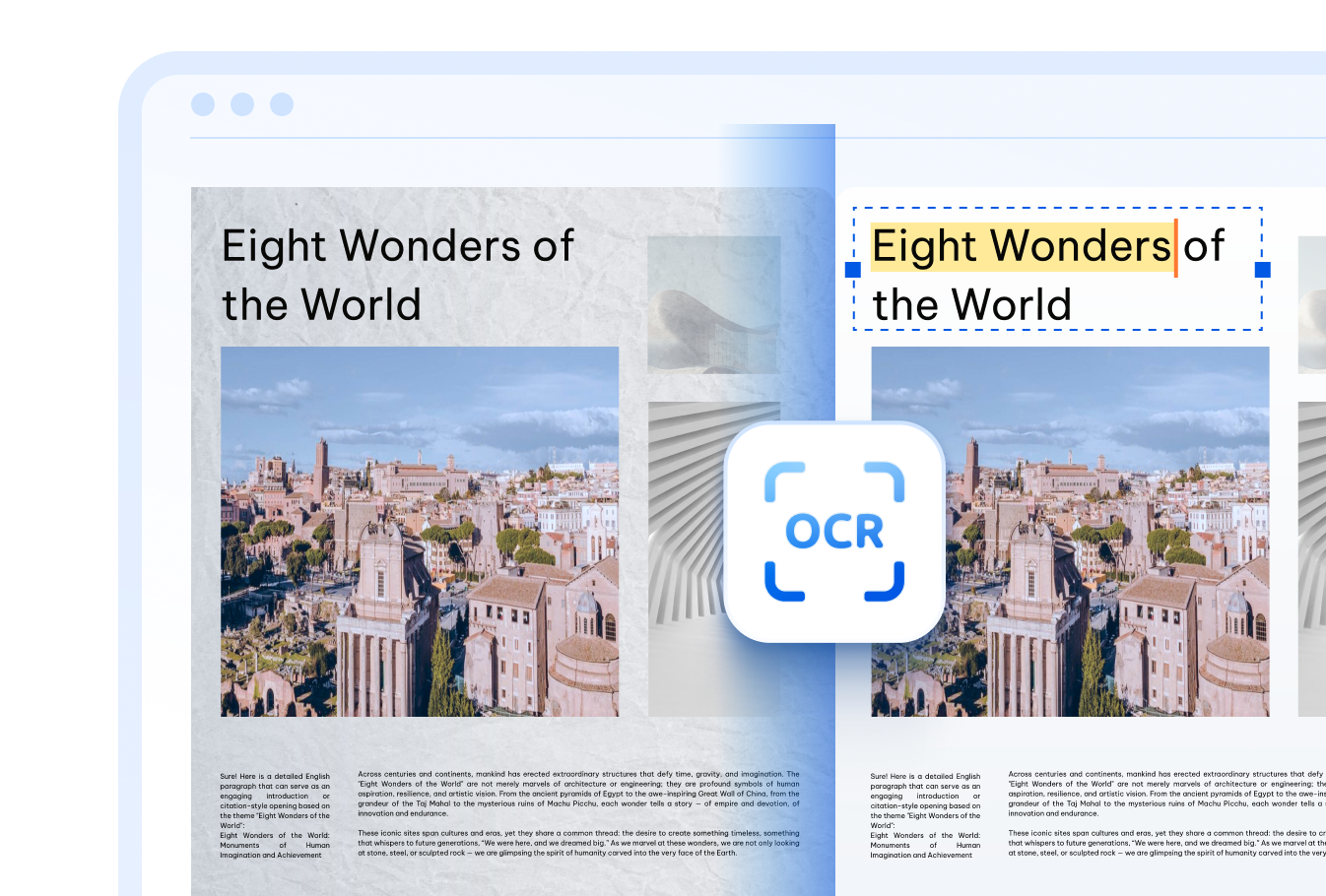

Clinic packets, school registration bundles, and onboarding packets can often run 4-8 pages, with terms, signatures, and detailed questions on the back of each page. The tool treats the entire packet as one job, so nothing is split off into a separate file that the user has to stitch back together later.
A form's printed question and the answer scribbled in next to it live on the same line. Both are picked up by the reader, so a registration slip answers to the right row, even when the handwriting is small or the ink is faded.
Files are carried over an SSL-protected channel and are deleted from our servers not long after the OCR forms job has run. Forms quite often contain names, addresses, and signatures that you would not want to keep on someone else's drive, so we do not.
You could be running OCR on a consent form, a complaint form, or an old paper registration — it doesn't matter. The reader splits the page into clean fields: header info one field, every answer blank another field, the signature dates and notes all come back as separate values.
Picks up the names, addresses, phone numbers, and emails sitting in the top blocks of every form.
Recognizes the form's title, version, and any reference or case number printed in the header.
Pulls the typed-or-written answers that fill in each field, matching them to the right question.
Reads the ticked or crossed boxes for consent items, allergies, dietary notes, or medical history.
Captures who signed, the date next to the signature, and the consent text the signoff applies to.
Pulls the dates, dollar amounts, and short notes that often sit in the margins or at the foot of a form.
Convert scanned documents, PDFs, and images into editable text with AI-powered OCR accuracy.
Go beyond basic text extraction. PDNob PDF Editor lets you edit extracted form content directly, annotate, sign, compress, and manage PDFs entirely offline. Built for the day-to-day paperwork that small teams and solo operators need to get through.

Upload your scanned form: a consent form, complaint form, or printed registration, and click "OCR PDF". The ABBYY-powered engine reads the page, picks out field labels and their answers, and hands back a searchable PDF with copyable text you can drop into a spreadsheet or contact list.
Yes. The engine is template-agnostic, so the same upload handles a parent's permission slip, a customer complaint form, and a paper signup sheet without you configuring anything per form type. Field labels and answer blanks come through as separate values, ready for OCR form processing downstream.
Yes. Printed labels and handwritten answers are both read, and checkbox ticks, initials, and signatures appear as their own fields in the output. Final accuracy depends on how dark the marks were to begin with and how clean the original scan is, but a phone snapshot of a typical permission slip usually comes through fine.
PDNob accepts JPG, JPEG, PNG, TIFF, and BMP images, plus scanned PDF forms forwarded by email or downloaded from a school portal. Phone snapshots work as well as flatbed scans, as long as the full form is visible and not cropped at the edges.
Yes. After recognition finishes, the values can be exported as a structured CSV or pasted straight into an Excel template, an email reply, or a basic contact list. That's exactly the format OCR for data entry workflows expect on intake, so it usually drops in without cleanup.
"OCR" stands for Optical Character Recognition. The "ocr full form" people sometimes search for is the same thing: turning an image of text into actual characters you can edit, search, and copy. This tool does that for paper forms specifically, so consent forms, complaint forms, and signup sheets all come out as editable text instead of locked pixels.
Edit, merge, sign, and convert PDFs effortlessly.
 PDNob Online
750,796,000 Users

PDF Leaders
Since 2007
10M+ Docs
Protected Daily
ISO
Certified Tools
Your Files
Never Stored