

PDNob Online is currently available only on Windows and Mac desktop computers. Please switch to a desktop browser to use our features.
Founded in 2007, Tenorshare PDNob is trusted by millions to simplify work.
8,508,519 medical records have been processed for free.
Get PDNob Desktop, Your All-in-One PDF Solution!
3 Simple Steps to Extract Data from Scanned Medical Records or Images:
Upload your medical record file or scanned image to PDNob.
Choose the document language and click "OCR" to start processing.
Download your result as a fully searchable, editable file with the extracted data.
A doctor's shorthand on a chart or prescription pad rarely lines up in neat rows, so generic text recognition tends to stumble on cramped, slanted handwriting that a nurse or pharmacist could read at a glance.
Charts that have been faxed and re-scanned several times between clinics often arrive with washed-out ink and streaky lines, leaving patient names and dosage figures barely legible by the time they reach the next office.
Lab panels and admission forms pack dozens of small fields onto one page, so a single misread box can shift an entire row of values, which is a real problem when the numbers feed into a patient's chart.
Front-desk staff and billing teams still spend hours keying patient details from paper charts into a system by hand, and every extra minute at the keyboard is a minute not spent with a patient or a claim.
PDNob's engine has been tuned on intake forms, lab panels, discharge summaries, and prescription pads, so it recognizes the layout patterns and terminology unique to healthcare paperwork instead of treating a chart like a generic page of text. A phone photo, a fax, or a flatbed scan all come out the same way: clean, structured data you can search, copy, or drop straight into another system.
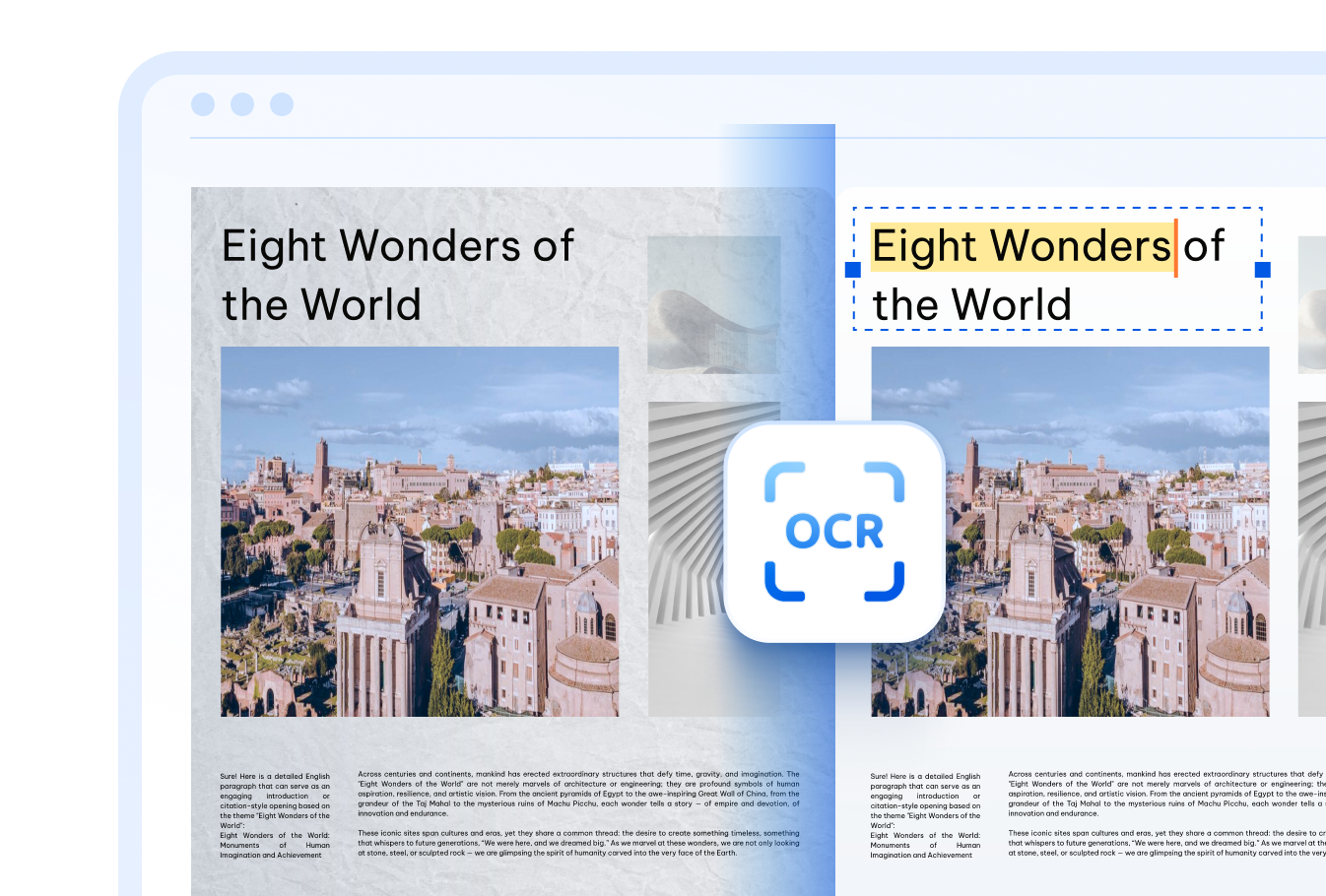
Once a record has been processed, PDNob hands back a searchable, editable file, so a specific lab value or note can be located in seconds rather than by flipping through pages of a printed chart.
Records passed between offices are rarely pristine. PDNob's recognition model is built to work with grainy faxes and dim phone photos, pulling out usable data even when the source copy has seen better days.
Files travel over an encrypted connection and are cleared from PDNob's servers shortly after processing finishes, so sensitive patient information is never left sitting on a server longer than it needs to be.
Upload a scanned chart, lab report, or prescription and PDNob will pull out the details that matter — your diagnoses, medications, test results, and provider information, all in one pass.
Reads the identifying information printed at the top of every medical document.
Captures the names of every physician and facility associated with your record.
Identifies the document type and records the dates that define your visit.
Pulls every condition you were diagnosed with, along with allergies and clinical notes.
Reads each prescribed medication, dosage, and instruction as a separate, easy-to-find record.
Captures test values, the normal range, and clear flags for anything outside it.
Go beyond basic data extraction — PDNob PDF Editor lets you edit extracted content directly, annotate, sign, compress, and manage PDFs entirely offline. Built for professionals who need precision and speed in every document task.

Upload the scan, fax, or photo to PDNob, choose the document language, and click OCR. The tool reads the medical record and returns editable, searchable text within seconds, and there's no account or software install required to try it.
PDNob handles printed forms and typed reports very reliably, and it can pick up clear, well-formed handwriting reasonably well too. Rushed or heavily abbreviated physician shorthand may lower accuracy, so a sharp, well-lit scan gives the most dependable results.
On a clean scan, PDNob's healthcare OCR reaches strong accuracy for lab values, dosage figures, and prescription details. As with any OCR tool, it's worth double-checking critical numbers against the original document before they're used in a clinical decision.
PDNob accepts common image formats such as JPG, PNG, TIFF, and BMP, along with scanned PDF files. A photo taken directly on a phone works just as well as a file from a flatbed scanner or fax machine.
Direct copy-and-paste of the recognized text isn't supported at this time. Once processing finishes, download the resulting file to view, search, or copy the extracted content from there.
The online tool accepts files up to 15MB per upload. For larger batches of records or bigger scanned files, the PDNob desktop application removes that limit entirely.
 PDNob Online
750,796,000 Users

PDF Leaders
Since 2007
10M+ Docs
Protected Daily
ISO
Certified Tools
Your Files
Never Stored