

PDNob Online is currently available only on Windows and Mac desktop computers. Please switch to a desktop browser to use our features.
Founded in 2007, Tenorshare PDNob is trusted by millions to simplify work.
1,287,463 death certificates have been processed with this tool.
Get PDNob Desktop, Your All-in-One PDF Solution!
Follow These 3 Steps to Read Death Certificate Data from Any Scan:
Upload a scanned PDF or photo of a death certificate to get started.
Pick the recognition language and click "OCR PDF" to start the run.
Download the recognized output as a searchable PDF or copy fields straight into a spreadsheet.
Death certificates come from thousands of counties, states, and countries, each with its own form. A template-driven OCR engine drops fields whenever the form shifts, so the recognized text ends up half-empty.
Older death certificates are often pulled from microfilm rolls or decades-old paper scans with low contrast and broken baselines, so the printed text fades into the background and a basic OCR pass returns nothing usable.
Many death certificates have certifier notes, margin corrections, or cause-of-death add-ons written by hand, and a single-pass OCR pulls the pencil marks into the printed text and scrambles the cause-of-death field.
Raised embossed seals and registrar stamps sit on top of the printed names and dates, and a flat OCR pass reads the seal ink as a letter, which then corrupts the recognized name and certificate number fields.
PDNob's death certificate OCR software runs on the ABBYY recognition engine, which is fine-tuned for vital records, certificates, and structured official paperwork. Whether the source is a flatbed scan, a forwarded PDF, or a smartphone snapshot, death certificate text recognition pulls decedent name, date of birth, date of death, place of death, cause of death, and certificate number as editable fields — ready to drop into a genealogy database, an estate worksheet, or any claims workflow.
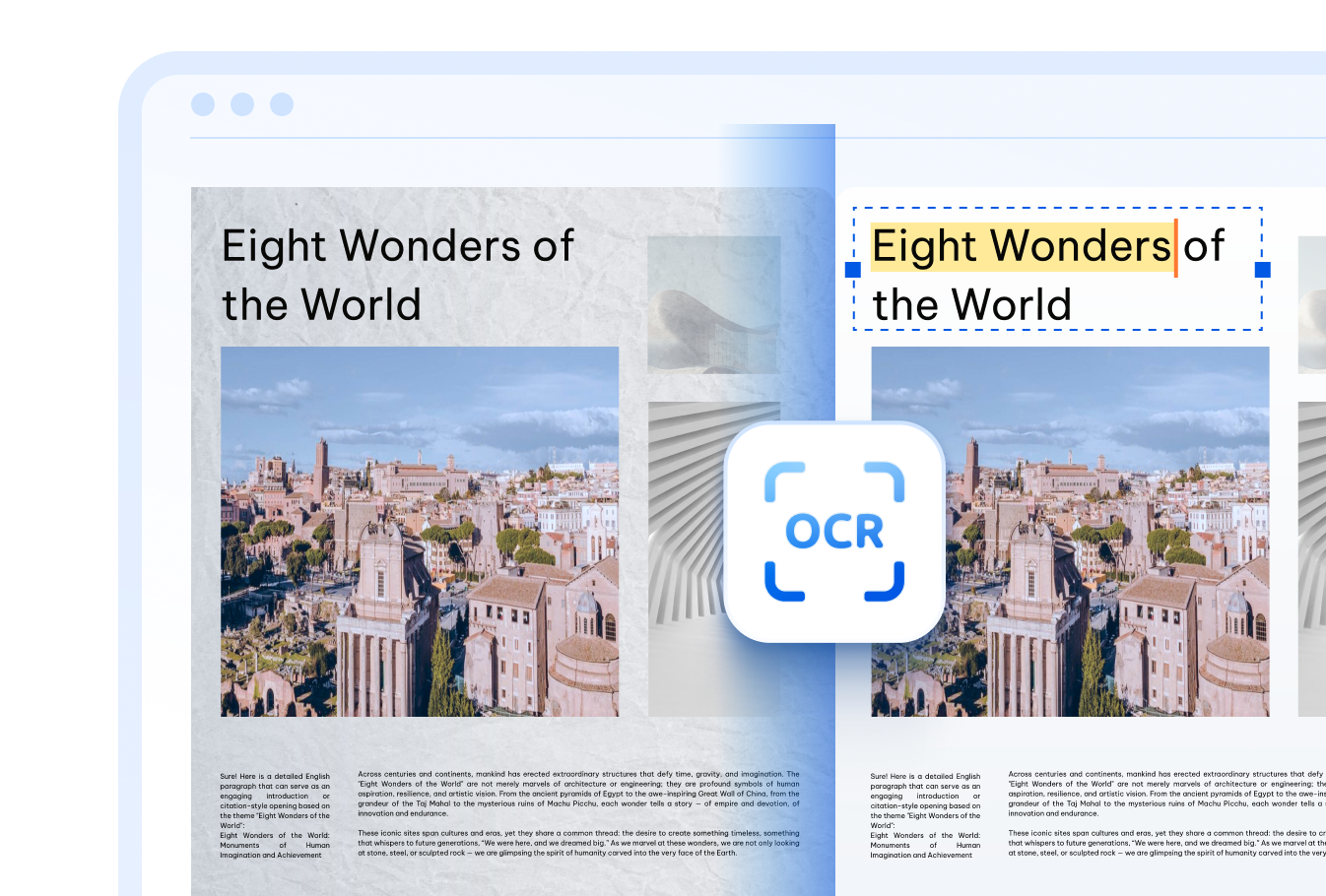

After the run finishes, PDNob hands back a searchable PDF that keeps the original death certificate layout intact, so any name, date, or field can be highlighted, copied, or searched later — handy for archival research, claim follow-up, and estate audits.
Raised seals, registrar stamps, and faded ink layered on top of printed names can throw off generic OCR. PDNob's engine separates the printed text from the marks, so the recognized fields stay clean even when the source copy is decades old.
Every death certificate you upload travels over an encrypted channel and is removed from our servers shortly after the run wraps, so sensitive vital records are never stored long-term and never shared with third parties.
PDNob's reader pulls structured fields across the whole document and keeps the original certificate layout intact.
Pulls the deceased's identifying details from the death certificate, including name, dates, and demographics.
Date, time, and place of death, pulled as separate fields so each value can be checked off the claim form.
Cause-of-death lines, manner of death, and contributing conditions, all read as separate fields the way the certifier wrote them on the form.
The person who supplied the information and the medical certifier or coroner, each captured as their own field.
Burial, cremation, removal, and donation details, each captured as its own field for funeral-home paperwork.
Signals that tell your archive what kind of certificate this is and how clean the read was, so the right downstream rule fires.
Go beyond basic text extraction — PDNob PDF Editor lets you edit the recognized fields directly, annotate, sign, compress, and manage every certificate offline. Built for genealogists, paralegals, and benefits staff who need a clean read on every vital record.

Upload your scanned death certificate to the tool and click "OCR PDF". The ABBYY-powered engine reads the document, picks out fields like name, date of death, place of death, and cause of death, and hands back an editable, searchable PDF plus copyable text.
Yes. The reader is built to handle penciled notes, registrar stamps, and older prints. Printed fields come back clean, and handwritten marks sit on their own layer so they don't pollute the recognized names or dates.
You can upload JPG, JPEG, PNG, TIFF, and BMP images, plus PDF files. Phone-camera snapshots work as well as flatbed scans, as long as the death certificate is fully visible and not cropped at the edges.
Yes. The output is a searchable PDF that keeps the original death certificate layout intact, so the field positions on screen match the field positions on the paper — easy to double-check before you file the record.
Yes. After the recognition job finishes, the recognized fields can be exported as a structured CSV or copied directly into an Excel template — useful when you want to bulk-import death certificate data into an estate or genealogy worksheet.
Yes. The engine is trained on vital records from multiple U.S. states and several common international forms. As long as the source is legible, the output keeps fields separated so each one can be checked off.
 PDNob Online
750,796,000 Users

PDF Leaders
Since 2007
10M+ Docs
Protected Daily
ISO
Certified Tools
Your Files
Never Stored